
Not a Stepford Wife: Judy Pigott
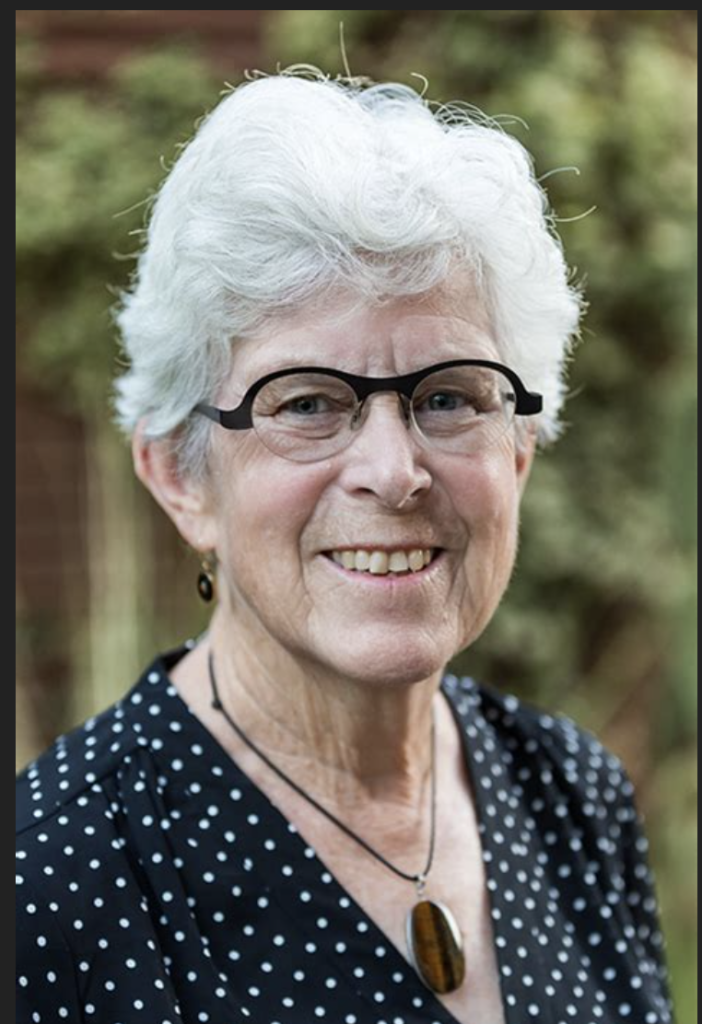
Judy Pigott is a mom, grandmother, author, activist, educator, and community member who has lived in nine cities and three countries. She is committed to fostering communities that nurture all participants physically, intellectually, emotionally, and spiritually.
What advice would you give to your younger self?
To start at the beginning, I’m grateful for the life I’ve been able to lead. Still, I wish I’d known that an argument did not need to be frightening. Anger could be expressed without incurring devastation. Bringing ‘negative’ emotions forward from inside me to the outside wouldn’t cause my world to explode. I thought that fear, anger, grief, and resentment were powerful enough to be off limits to me. What I have discovered is that being a person of whom others would say, “Judy always finds something positive to say,” caused me to erase a powerful part of myself. I was more than a smiling and competent façade. I was not a Stepford Wife!
I know I hid behind “niceness” for far too long before exploring how a whole truth is usually nuanced and, once acknowledged, can bring clarity. Emotions can, and often are, simultaneous and conflicted. Saying a hard thing, with kindness, can and often does bring a friend or lover closer. Yes, it was my version of what I heard as the family edict: if you can’t say something nice, don’t say anything at all. But it was not healthy for me, my family, or my community. I can now say I wish I’d learned this sooner.
What wisdom would you share with a younger person about aging and what it means?
One of the true gifts of this eighth decade of my life is that others assume I have wisdom to offer. Two decades ago, I even wrote in my journal that having wisdom was a goal. How silly!! Really, all I needed to do was be patient, and others would ascribe this to me without my having to do anything at all except stay alive. And over that, I have so little control!
Yes, I can exercise and eat a fairly healthy diet. I can have inherited “good genes.” Yet I cannot control most of what is going to affect my life. Three of my four parents died while apparently healthy and relatively young. Children of close friends have died from addictions or another mental health crisis. I cannot stop these things from happening, but I’ve learned that, through it all, kindness, hope, and joy can flourish and sustain me through pain, grief, and trials. I may not know when it will get better, but I can believe that it will. I do not need to know the timeline.
What is important to you looking ahead?
I’m often teased about my intention to do less and do that more slowly. So be it. What others see is only a portion of what is anyway.
Looking forward to whatever days, years, or decades are ahead, I hope to bring some laughter and joy to the world I inhabit. When the end point occurs, I hope someone will say, “She enjoyed being alive, and presumably is enjoying being dead.” Rebecca Solnit said, “To hope is to accept despair as an emotion but not as an analysis. To recognize that what is unlikely is possible, just as what is likely is not inevitable.”